Capacity and Immediate Readiness
At the bear parks operated by Stiftung für Bären and Bears in Mind, we currently have capacity to receive the brown bears from Český Krumlov castle. We are prepared to initiate all necessary steps for their transfer immediately and can accommodate all three animals.
However, priority is given to the two eight-year-old bears, Polyxena and Vilém, who have the longest expected lifespan ahead. These individuals have the highest likelihood of full rehabilitation, including a gradual reduction of stereotypic behaviours and improved overall health.
If Polyxena and Vilém were transferred, the older female Marie Terezie would gain access to the entire enclosure (just under 900 m²). Unfortunately, even this expanded space still does not meet modern husbandry standards, but it would provide her with more room than she currently has.
Transport Preparation and Timeline
We would cover all preparation, documentation, and transport costs from our own resources.
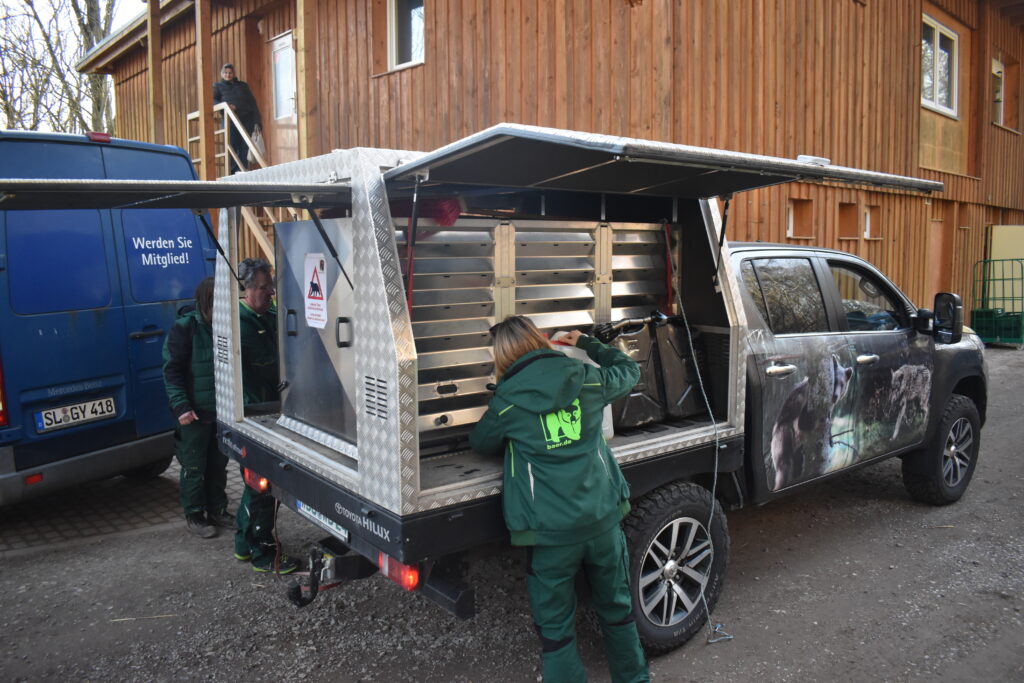
Preparing Polyxena and Vilém for transport would take approximately six months, including:
- training for voluntary entry into the transport crate
- veterinary checks, tests, and required documentation
- preparation of appropriate enclosures at the receiving bear park
Most Suitable Current Destination: Worbis
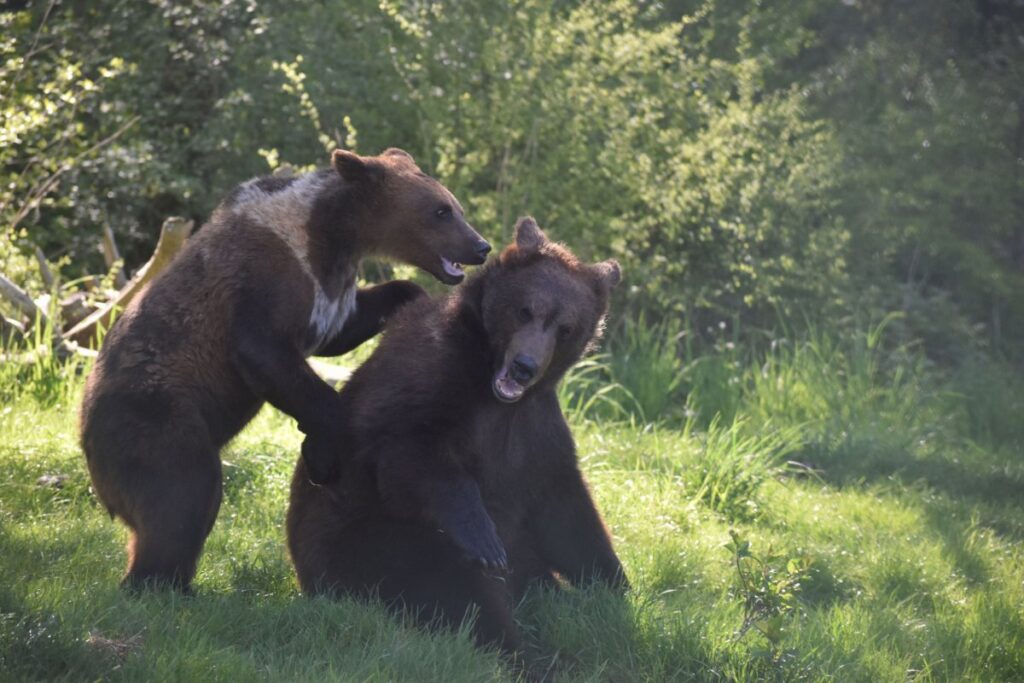
The most feasible and logical option at present is Alternativer Bärenpark Worbis (Stiftung für Bären), which:
- has capacity to receive both bears
- is the closest bear park to Český Krumlov
Upon arrival, both bears would:
- Spend six weeks in a 250 m² quarantine enclosure (required by law).
- Move together into a 1-hectare natural enclosure, providing a fully adequate and stimulating rehabilitation environment.
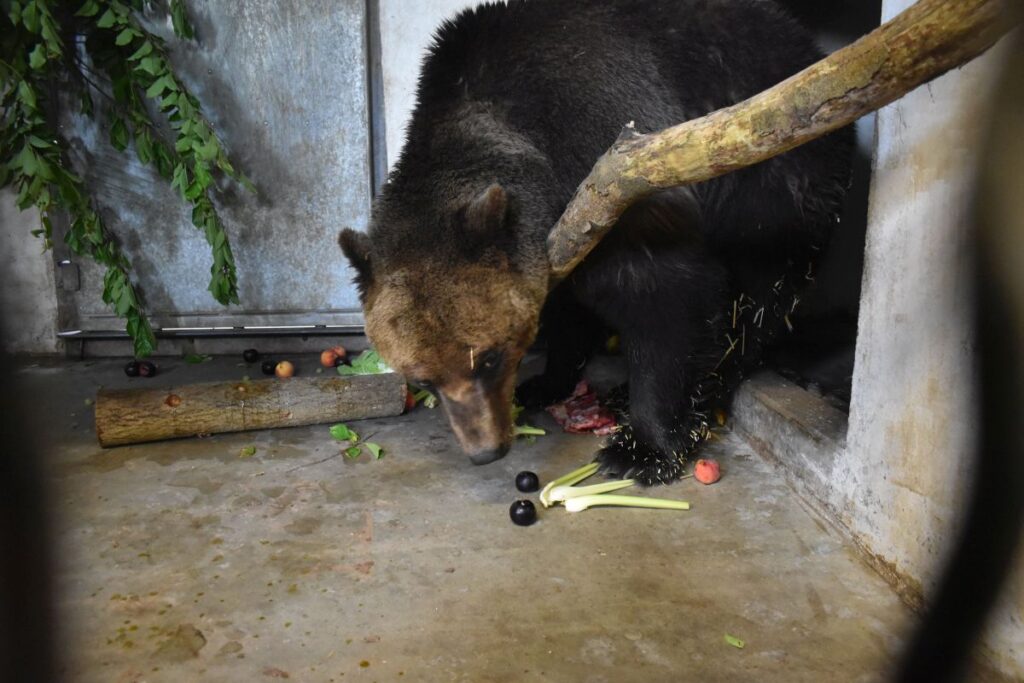
Czech Legislation on Captive Bears: Current Standards and Needed Reforms
The minimum standards for keeping bears in human care in the Czech Republic are defined in Decree No. 213/2022 Sb. These are very basic requirements that facilities must meet by 30 June 2032. The decree allows several types of barriers, including solid walls, bars, glass, and various types of mesh.
Barriers and Visibility
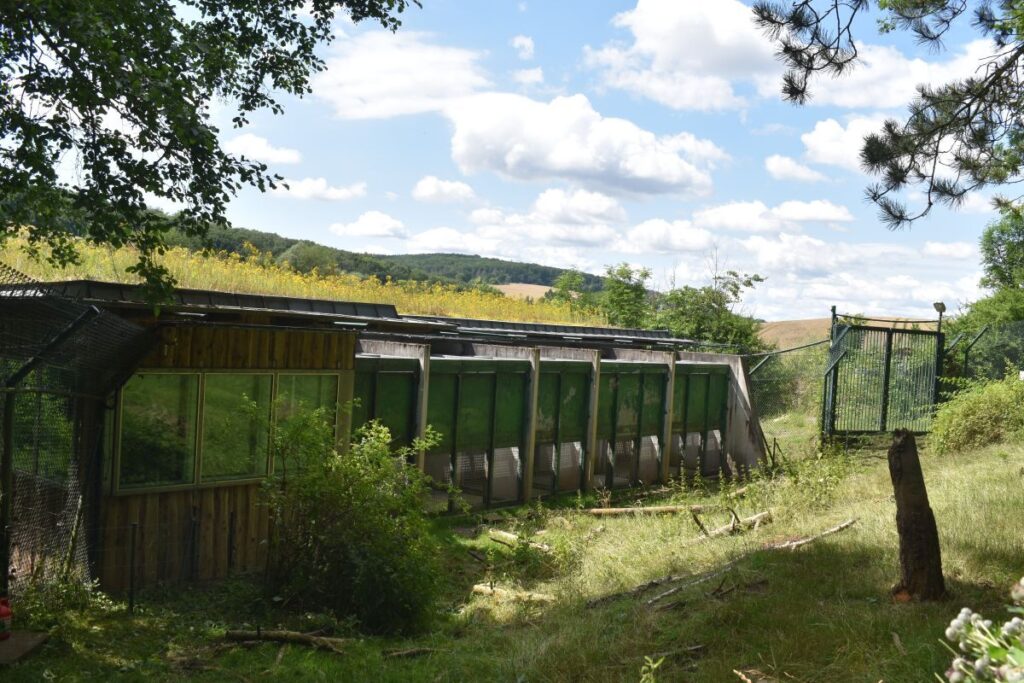
We strongly advise against using opaque walls as the primary enclosure barrier. At most 50% of the barrier should be non-transparent. Mesh fencing is preferable because it gives bears a clear view of their surroundings—something scientific studies show is crucial for their welfare (e.g. Maher et al. 2021). Barriers should also be at ground level, not raised above the terrain, as seen in some castle moats.
Minimum Space and Basic Requirements
Under current Czech law:
- One or two bears must have at least 300 m² of outdoor space.
- Each additional bear requires at least 150 m² more.
- Every bear must have access to an inside area that allows natural postures and movement.
- Outdoor areas must contain natural substrate on at least half of the surface, structural elements like logs or rocks, separate holding areas, and a water feature at least 50 cm deep.
What We Recommend
Our recommended minimum is about 1 hectare per bear, though the exact needs depend on each individual’s history and origin. Enclosures should be natural, three-dimensional, and stimulating, allowing bears to climb, swim, graze, and dig.
Czech law does not set any minimum size for indoor areas. In our parks, indoor spaces (minimum 12 m² per bear) are used only for quarantine or veterinary checks. They are designed with a safe keeper-access side and direct outdoor access for the animal.
We avoid using concrete as ground surface entirely. All outdoor areas use only natural substrate and include:
- Mature trees for climbing and scent-marking
- Grass for grazing
- Soil suitable for digging
- Naturalistic shelters (e.g. stone dens)
- Shrubs, including fruiting species such as raspberries or blueberries
- Water bodies with safe, gradual entry or submerged boulders
Welfare Beyond Space
Enclosure size alone does not guarantee good welfare. Bears have complex social and individual needs. If several bears share the same space, each must have access to a private outside den where they can rest away from other individuals and from visitors. The environment must also support natural behaviour by providing trees, grass, soil, and water.
Current Situation in Czech Facilities
Czech zoos generally provide the best available conditions for bears within the country. However, most still fall short of the standards defined by the LBE concept, leaving considerable room for further improvement. We therefore support initiatives aiming to establish specialised bear parks that operate according to LBE principles—facilities that are currently lacking in the Czech Republic. To raise welfare standards nationwide, dedicated training for Czech zoologists and animal keepers remains essential.
Recommended Legislative Changes
To improve bear welfare, we recommend updating the law to require:
- Uninterrupted outward visibility (a minimum of 50% of the outdoor enclosure) and ground-level barriers
- Larger minimum enclosure sizes
- Natural substrate as the dominant surface
- Natural outdoor refuges for each bear
- Diverse terrain and full use of space: up, down, and horizontally
These are fundamental elements of modern bear husbandry and reflect international best practices.